Why Kibana Reporting Fails in the Real World (and How Teams Work Around It)
Kibana reporting is a headless screenshot pipeline, not a semantic reporting engine. Here's why it breaks for real-world operational needs and what teams do instead.

Kibana reporting is a headless screenshot pipeline, not a semantic reporting engine. Here's why it breaks for real-world operational needs and what teams do instead.
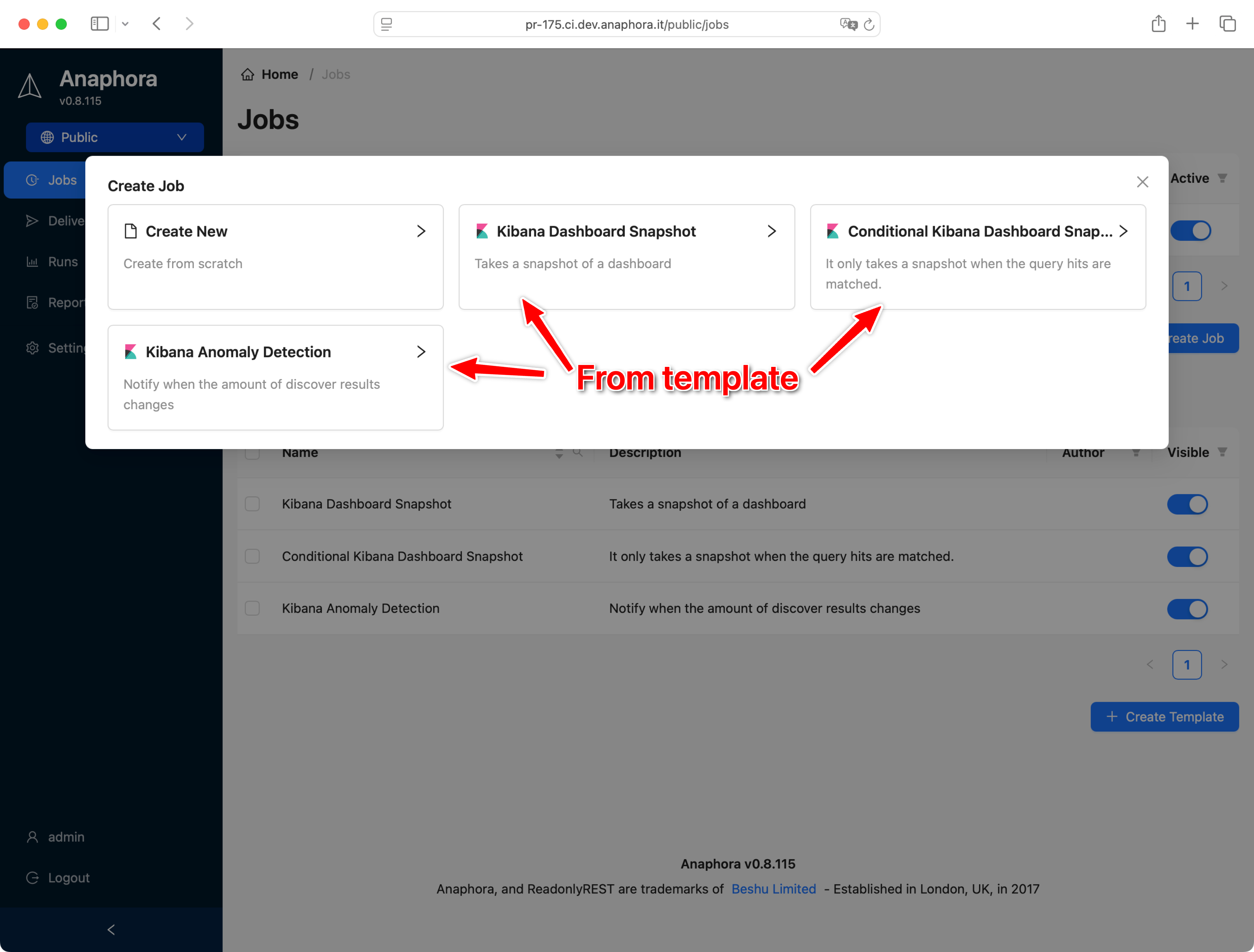
Create reusable job templates in Anaphora to skip repetitive setup — pre-bake branded PDF layouts, login flows, and common capture configurations.
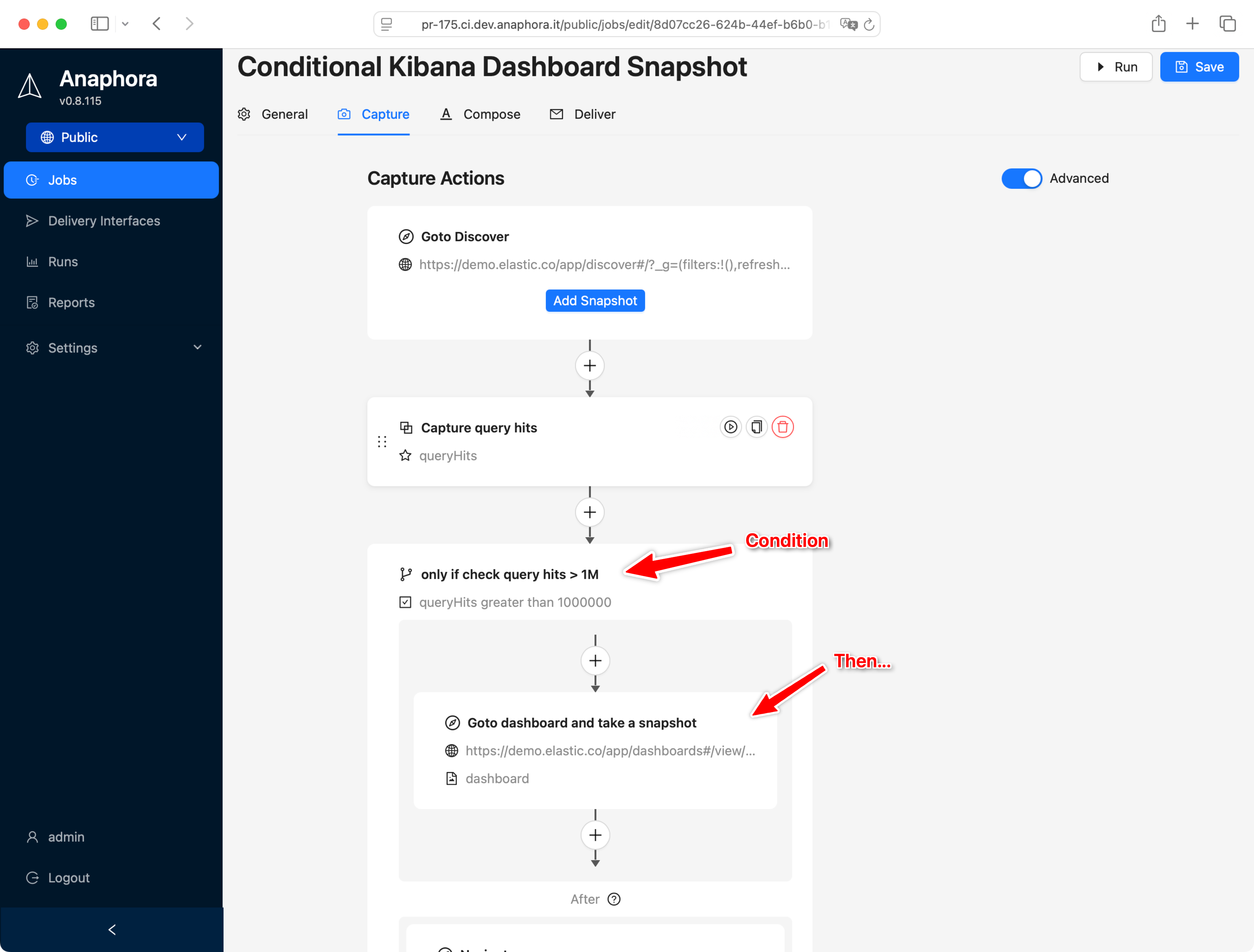
Add conditional logic to Anaphora jobs — compare captured values and trigger alerts only when thresholds are exceeded, like detecting brute-force login spikes.
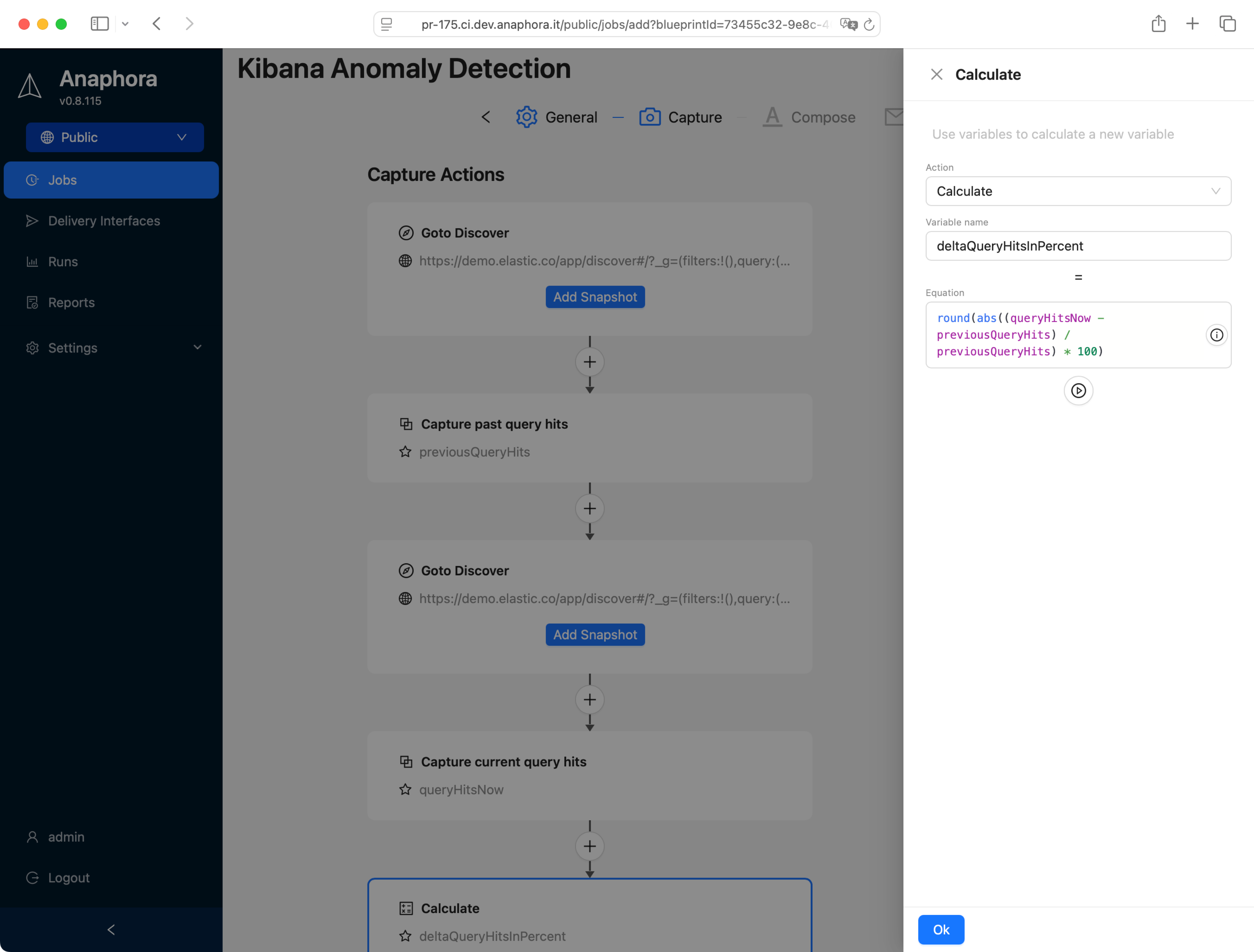
Use the Calculate action to compare hourly vs. daily Kibana hit counts and suppress alerts below a threshold — enabling dynamic anomaly detection.
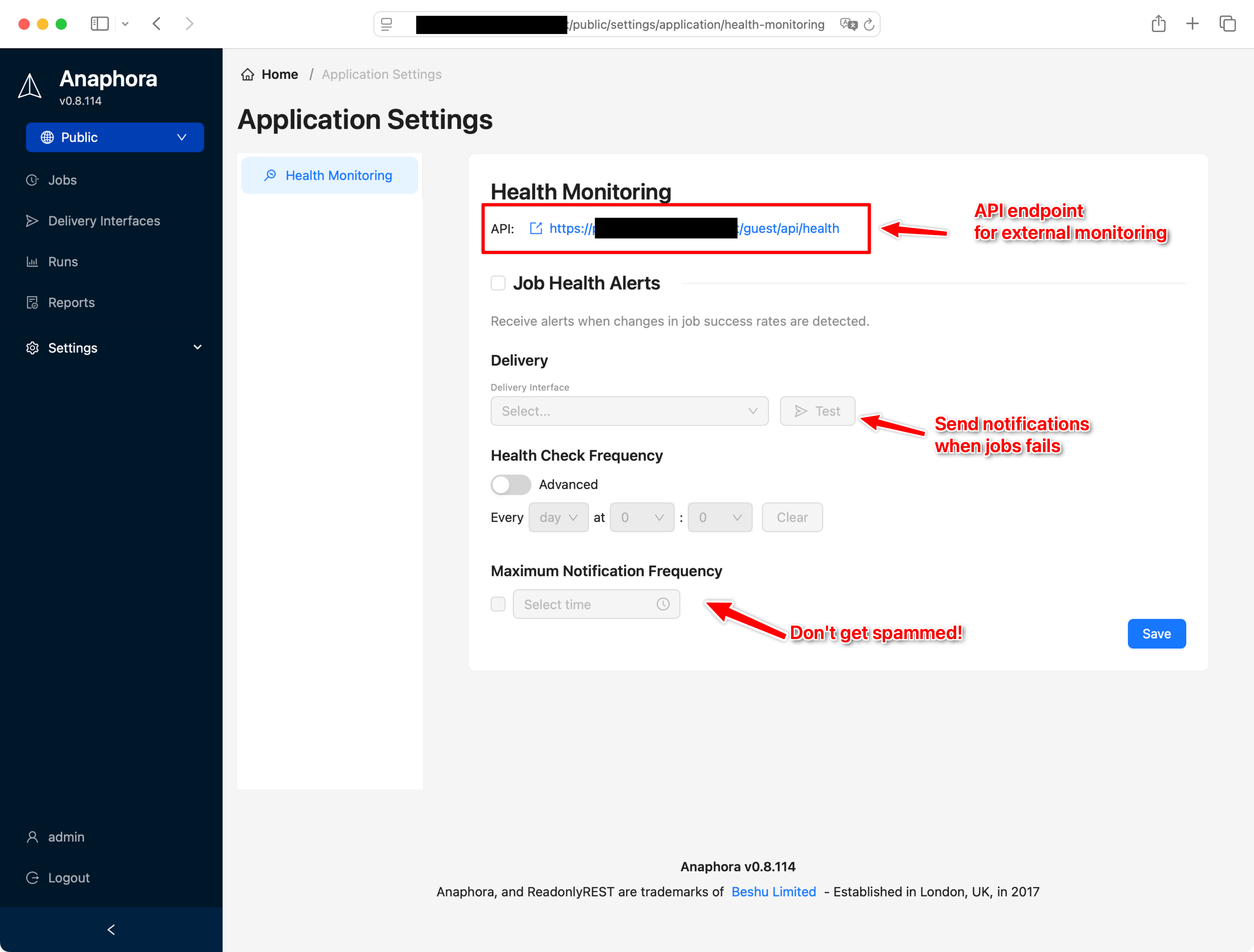
Get notified when Anaphora jobs fail — configure alerts via email, Slack, or webhooks with throttling to prevent notification fatigue, plus a REST API for health monitoring.
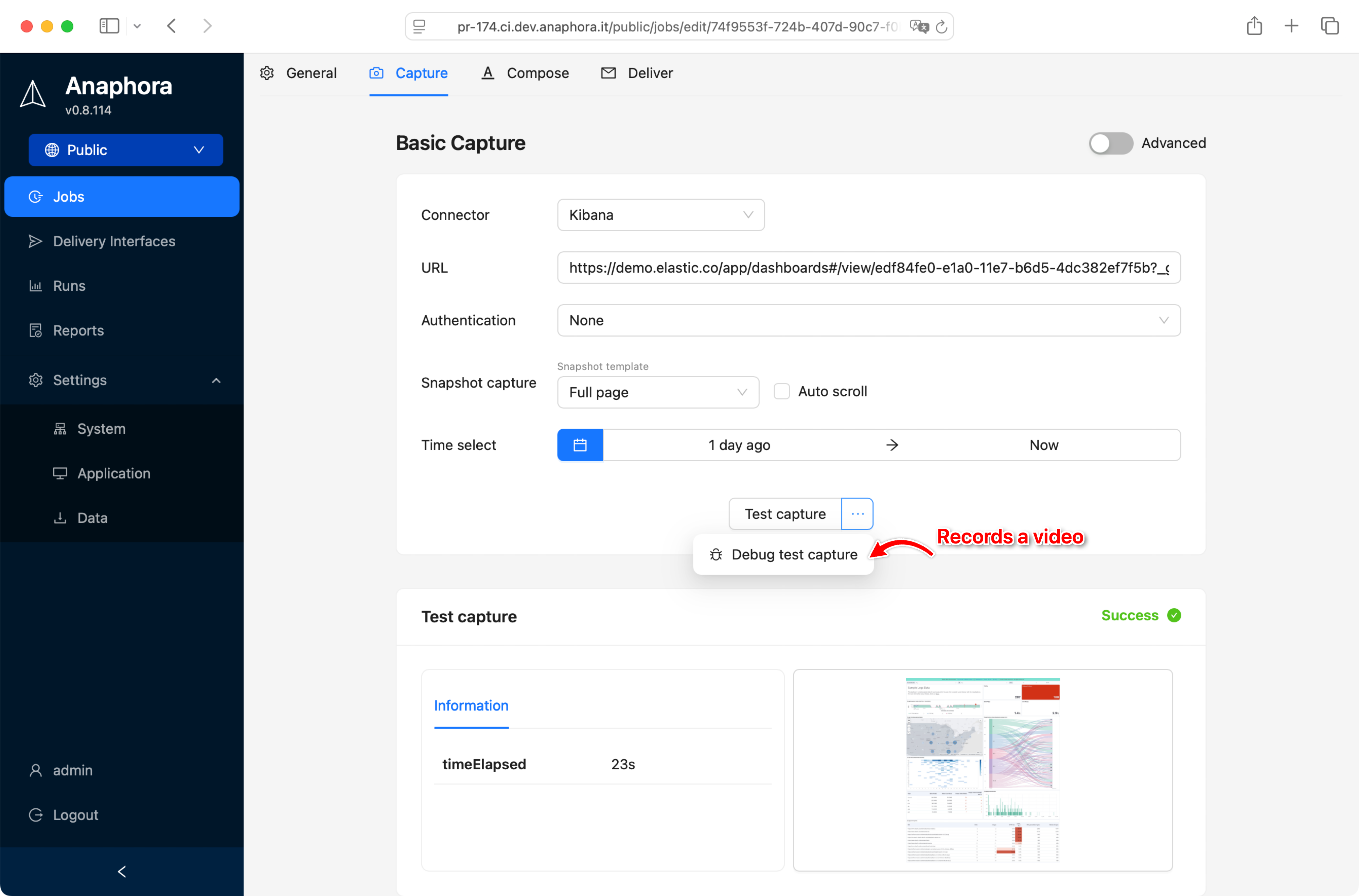
Record and download full videos of headless browser capture operations to debug complex multi-step Kibana workflows visually.
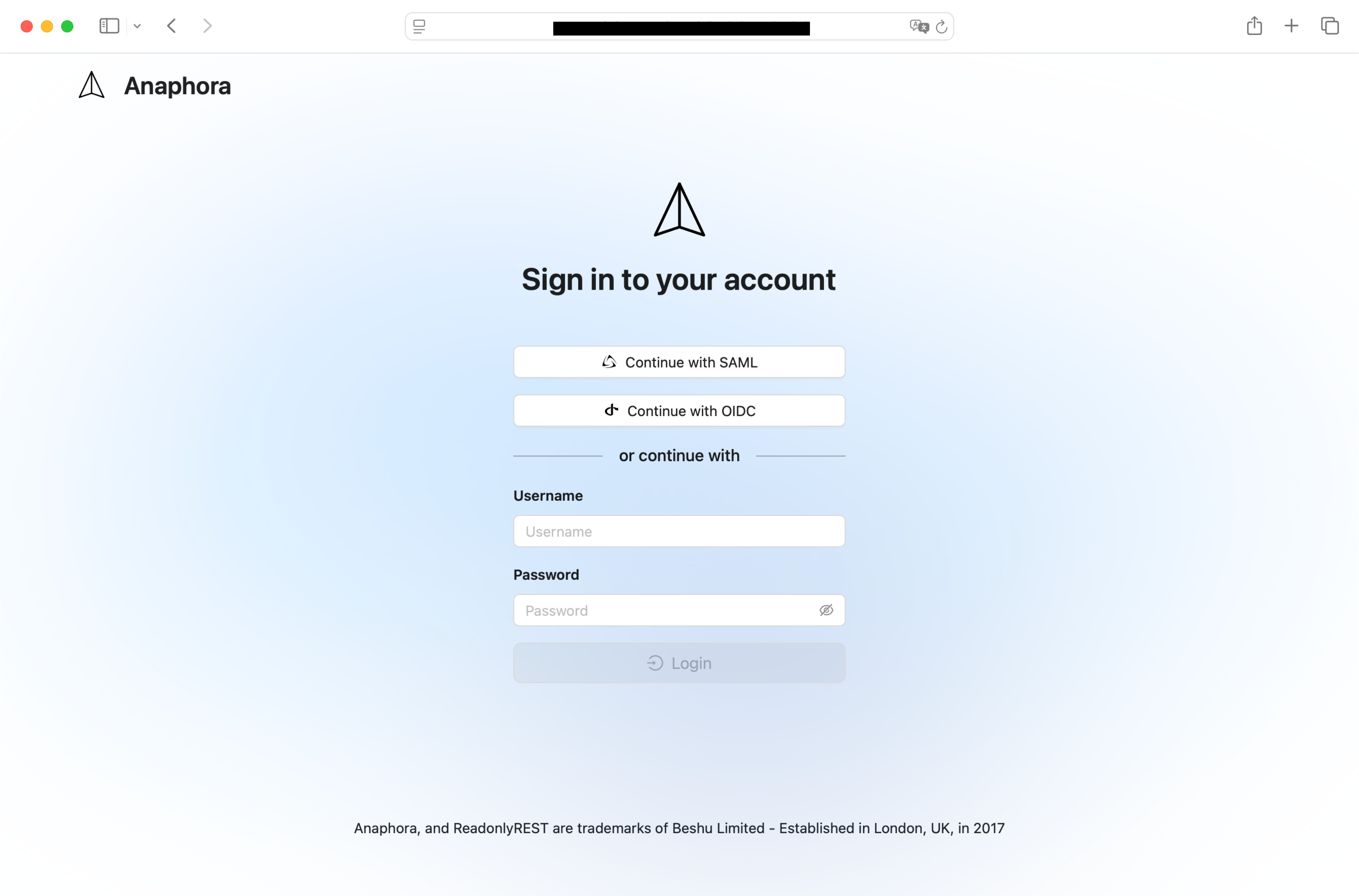
Anaphora now supports OpenID Connect (OIDC) authentication alongside LDAP and SAML SSO, with a redesigned login page for enterprise identity providers.
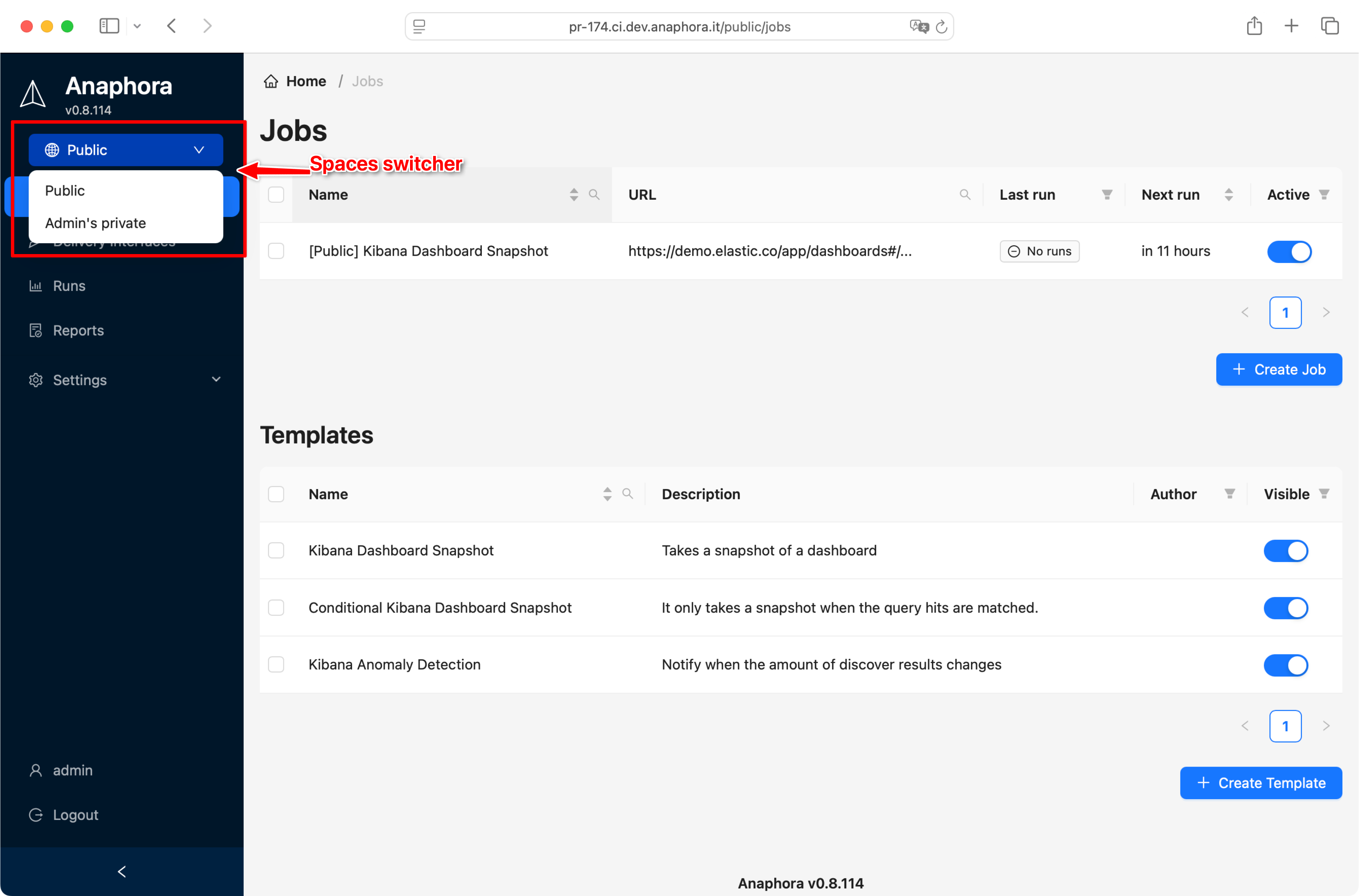
Spaces let you isolate jobs and delivery interfaces by user or role, with read-only, read-write, and admin permissions across multi-tenant environments.
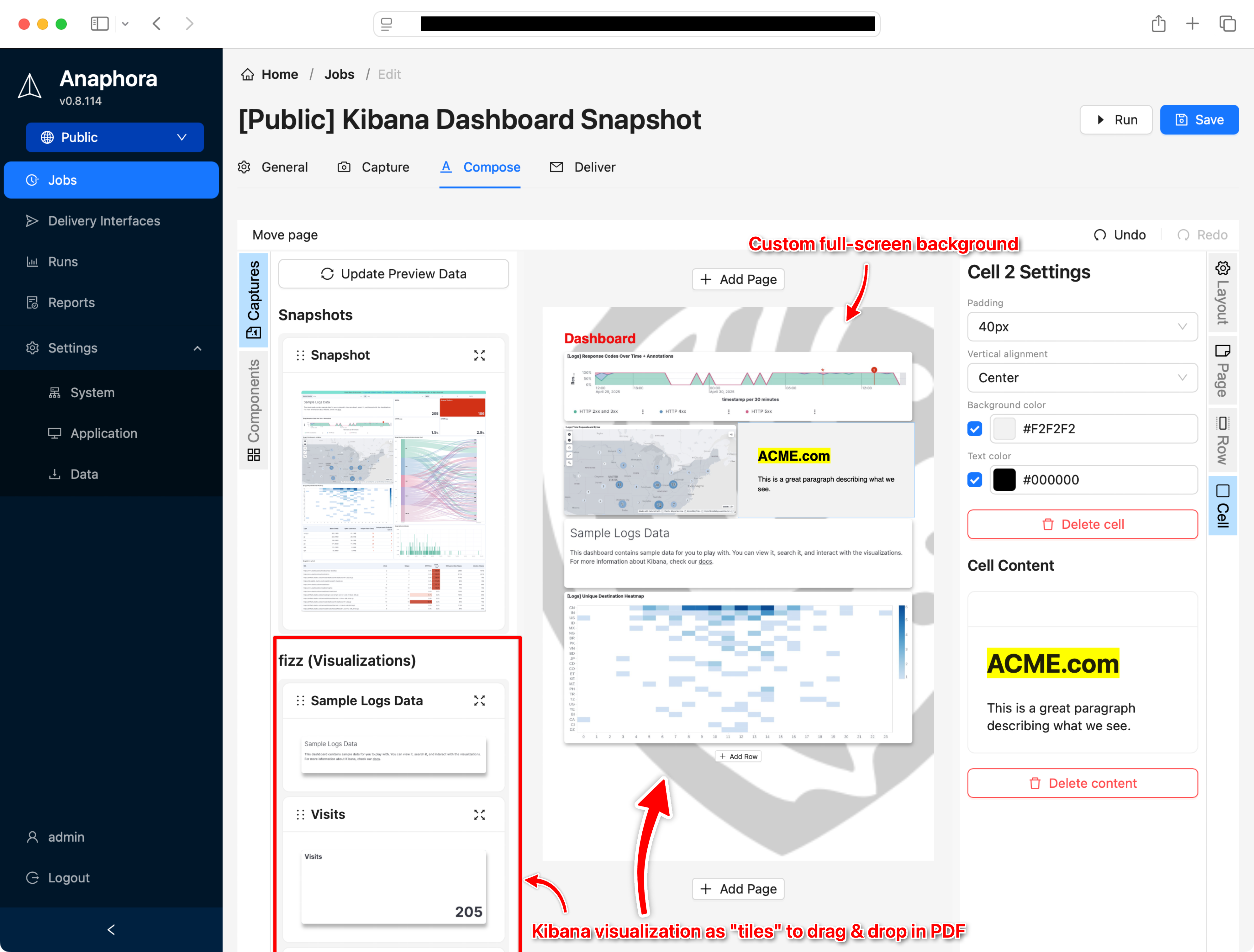
Capture Kibana dashboard visualizations as individual tiles and reassemble them with drag-and-drop in Anaphora's visual PDF report composer.
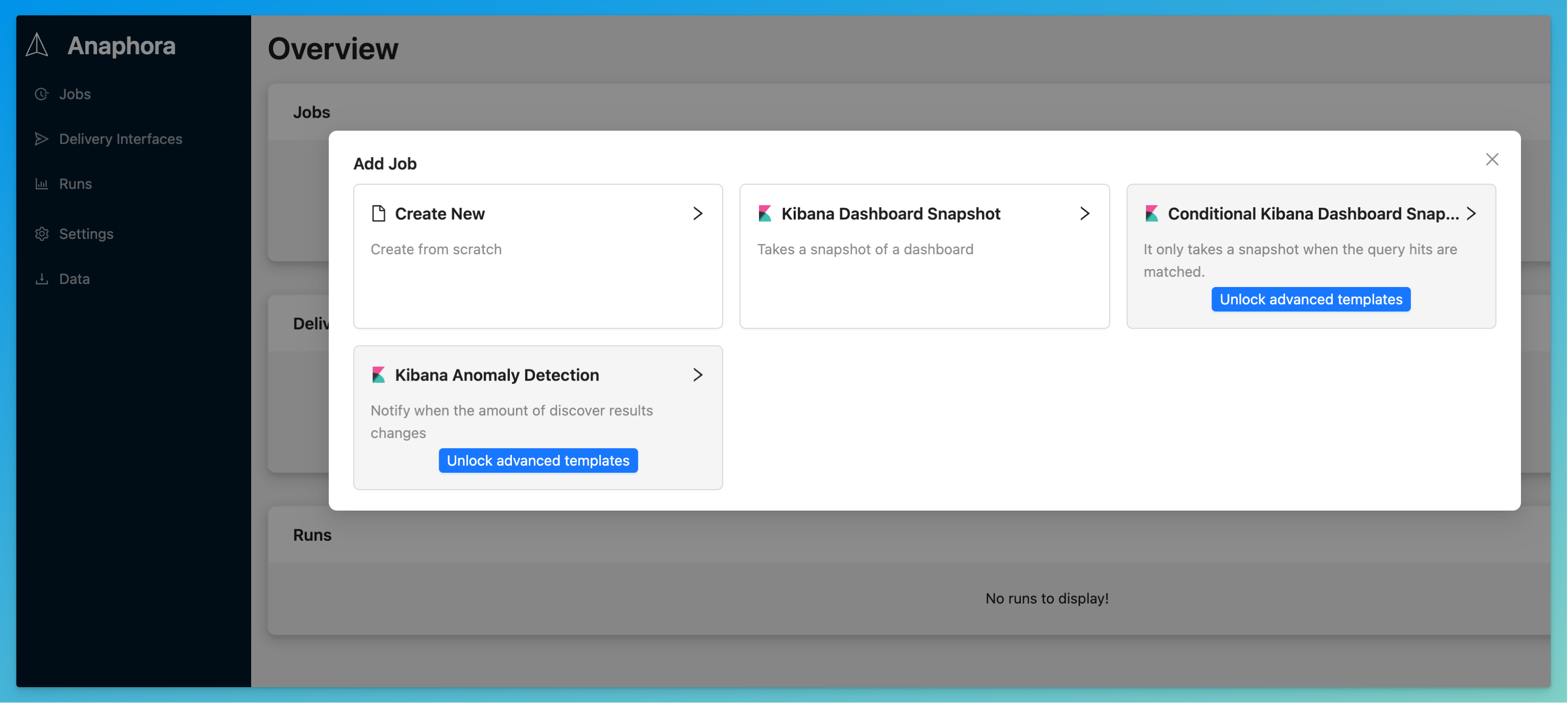
Anaphora 0.8.59 release — S3 delivery, ready-made job templates, improved PDF composer, Calculate capture step, and notification throttling.
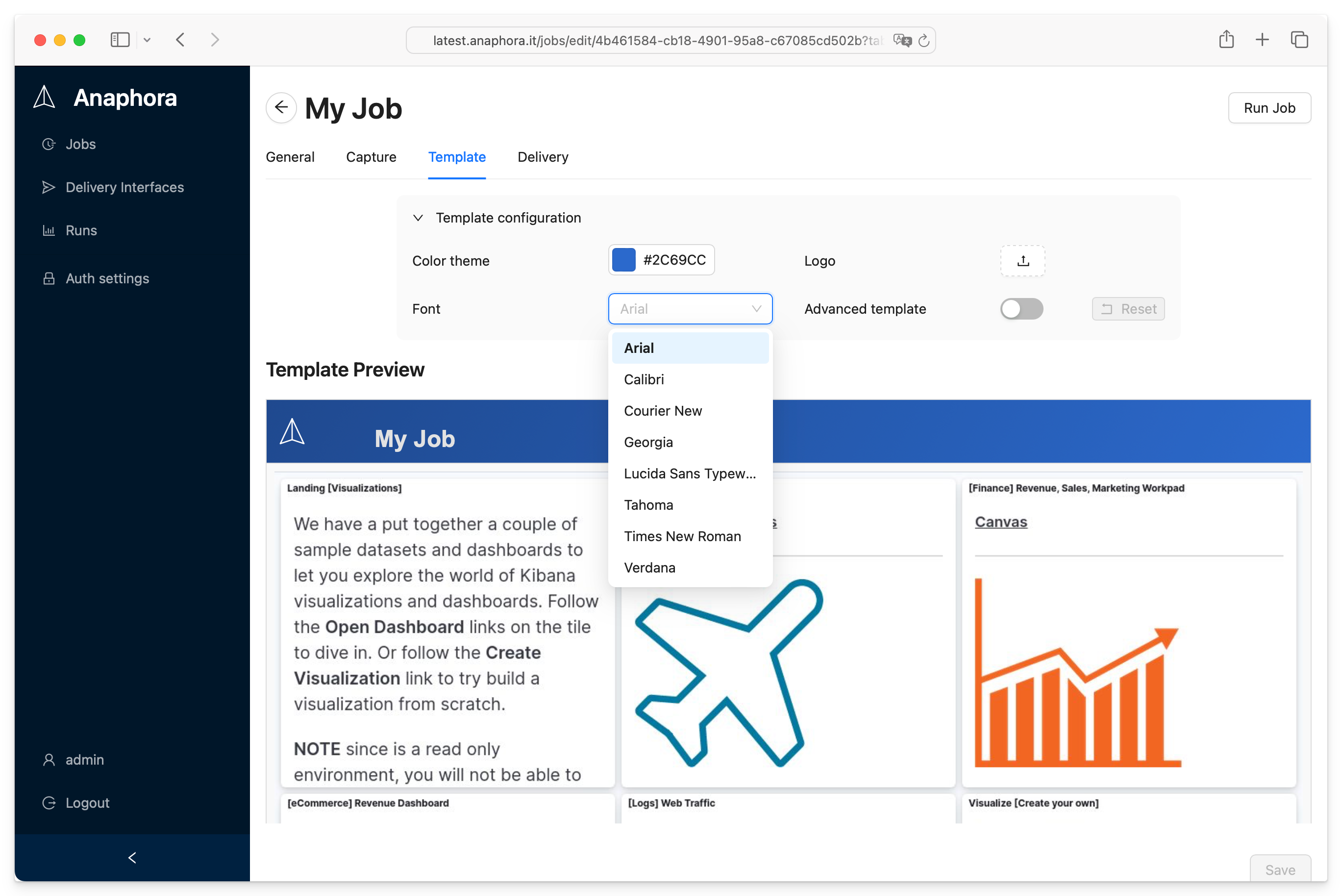
Anaphora 0.8.0 release — dashboard full-load detection, wait actions, and customizable report templates with logo upload and color themes.